
NXP BSH103: A Comprehensive Technical Overview of a High-Performance SiGe:C Low-Noise Amplifier MMIC
The relentless drive for higher data rates and enhanced connectivity in wireless systems places ever-increasing demands on RF front-end performance. At the heart of an effective receiver chain lies the low-noise amplifier (LNA), a critical component tasked with amplifying weak signals from the antenna while adding the absolute minimum amount of noise. The NXP BSH103 stands out as a premier solution in this domain, a monolithic microwave integrated circuit (MMIC) that leverages advanced Silicon-Germanium with Carbon (SiGe:C) technology to deliver exceptional performance from a compact, cost-effective package.
Architectural and Technological Foundation
The BSH103 is fabricated using NXP's proprietary SiGe:C BiCMOS process. This technology is pivotal to its success, offering a superior combination of high-frequency performance, low noise, and high integration compared to traditional GaAs or pure-silicon alternatives. The addition of Carbon (C) to the SiGe crystal lattice suppresses the diffusion of Boron, enabling the creation of highly stable and precise heterojunction bipolar transistors (HBTs). These HBTs are the core active devices within the MMIC, providing excellent high-frequency gain and remarkably low-noise figure (NF).
The device is internally matched to 50 Ω, which significantly simplifies design-in and PCB layout. This feature eliminates the need for complex external matching networks at both the input and output, reducing the bill of materials (BOM), saving board space, and accelerating time-to-market for end products.
Key Performance Characteristics
The BSH103 is engineered for applications in the L-band to S-band frequency range, specifically excelling between 0.5 GHz and 3.0 GHz. This makes it ideally suited for a vast array of applications, including cellular infrastructure (e.g., LTE, 5G active antenna systems), GPS/GNSS, industrial wireless links, and defense electronics.
Its standout performance parameters include:
Exceptionally Low Noise Figure: The amplifier achieves a remarkably low noise figure of 0.65 dB typical at 2.0 GHz. This minimal addition of noise is crucial for preserving the integrity of very weak desired signals in the presence of background interference.
High Gain: It provides a high small-signal gain of 20.5 dB typical at 2.0 GHz, ensuring sufficient amplification of the received signal for subsequent stages in the receiver chain.
Excellent Linearity: With an output third-order intercept point (OIP3) of +26 dBm typical, the BSH103 demonstrates strong linearity. This allows it to handle powerful interfering signals without generating significant intermodulation distortion, which can corrupt the desired signal.
High Reverse Isolation: The reverse isolation (S12) is better than -38 dB, enhancing the stability of the amplifier and preventing oscillations by isolating the output from the input.
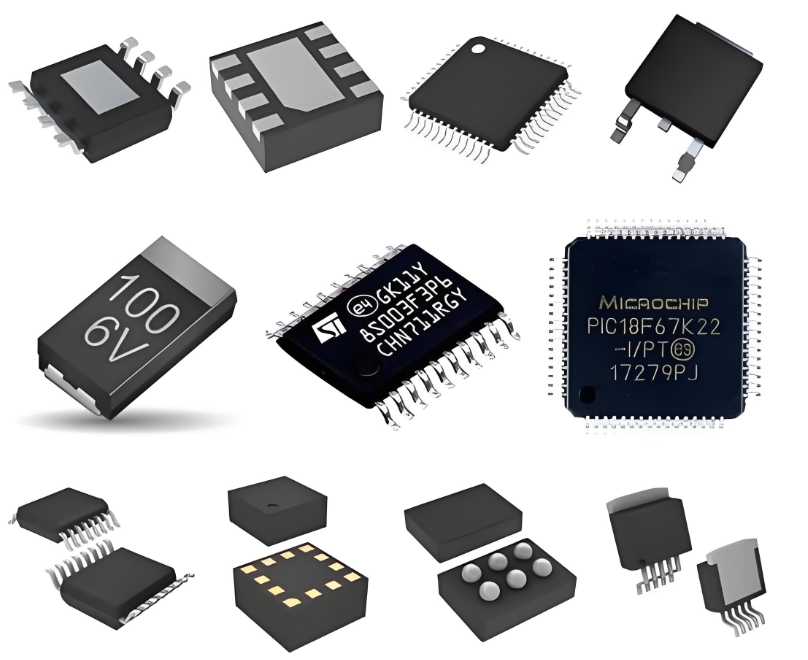
The MMIC is housed in a ultra-miniature 6-pin leadless plastic package (LPP), measuring just 1.0 x 1.0 x 0.5 mm. It operates from a single positive supply voltage between 2.7 V and 5.5 V, typically drawing 20 mA of current, making it suitable for both portable and fixed equipment.
Application Advantages
The integration, performance, and simplicity offered by the BSH103 provide tangible benefits for RF designers. Its 50 Ω matched design allows it to be treated as a simple block within a system, connected via transmission lines without additional discrete components. The high gain helps to overshadow the noise contribution of subsequent mixer stages in the receiver, improving the overall system noise performance. Furthermore, its robust linearity ensures reliable operation in spectrally crowded environments.
The NXP BSH103 represents a benchmark in LNA design, masterfully combining the material advantages of SiGe:C technology with practical, user-friendly integration. Its trifecta of ultra-low noise figure, high gain, and superior linearity in a minuscule form factor establishes it as a top-tier choice for designers aiming to maximize sensitivity and dynamic range in next-generation wireless receiver systems.
Keywords:
Low-Noise Amplifier (LNA)
SiGe:C Technology
Noise Figure (NF)
Monolithic Microwave Integrated Circuit (MMIC)
Linearity (OIP3)

